Geothermal heat and lithium in the Rhine Graben
What is the Rhine Graben ?
The Rhine Graben, also known as the Upper Rhine Graben or the Rhine Rift Valley, extends for 300 km from Basel in the south to Frankfurt in the north and is 30–40 km wide between the Vosges Mountains and the Black Forest.
It is a vast rift valley that formed between 45 and 25 million years ago during the Tertiary period, as a result of crustal stretching and thinning, which led to subsidence.
The Rhine Graben subsurface is composed of several geological formations: a granitic basement inherited from an ancient mountain range, overlain by sedimentary deposits of various facies (fluvial, aeolian, marine, or coastal).


Why is hot and lithium-rich water found in the Rhine Graben?
The RG subsurface is particularly favorable for geothermal energy. In this region, the Earth’s crust is thinner than elsewhere, allowing heat from the Earth’s mantle to rise closer to the surface. As a result, very hot water can be found at shallower depths than in other regions.
This geothermal water originates from rainwater infiltration through time, mixed with highly saline fluids. These fluids derived from ancient seawater trapped within sedimentary formations, composed of limestone, clay, and other materials deposited at the bottom of seas or lakes millions of years ago. This mixture forms the geothermal water (also called “brine”), which can be reach temperatures up to 225°C at depth.
Geothermal heat production in Alsace: continuous monitoring of the subsurface
Alsace is situated in an area where natural ground movements occur on a daily basis. Under French regulations, this area is classified as having moderate seismicity. These events are generally infrequent and mostly of low magnitude.
Certain human activities can cause this type of movement. This is the case, for example, with the filling of dams. These movements are frequent, well-known and, in most cases, imperceptible.
Drilling, extracting, and then reinjecting geothermal water at depths of several hundred meters, so that it can resume its natural cycle, is strictly regulated and follow established protocols.
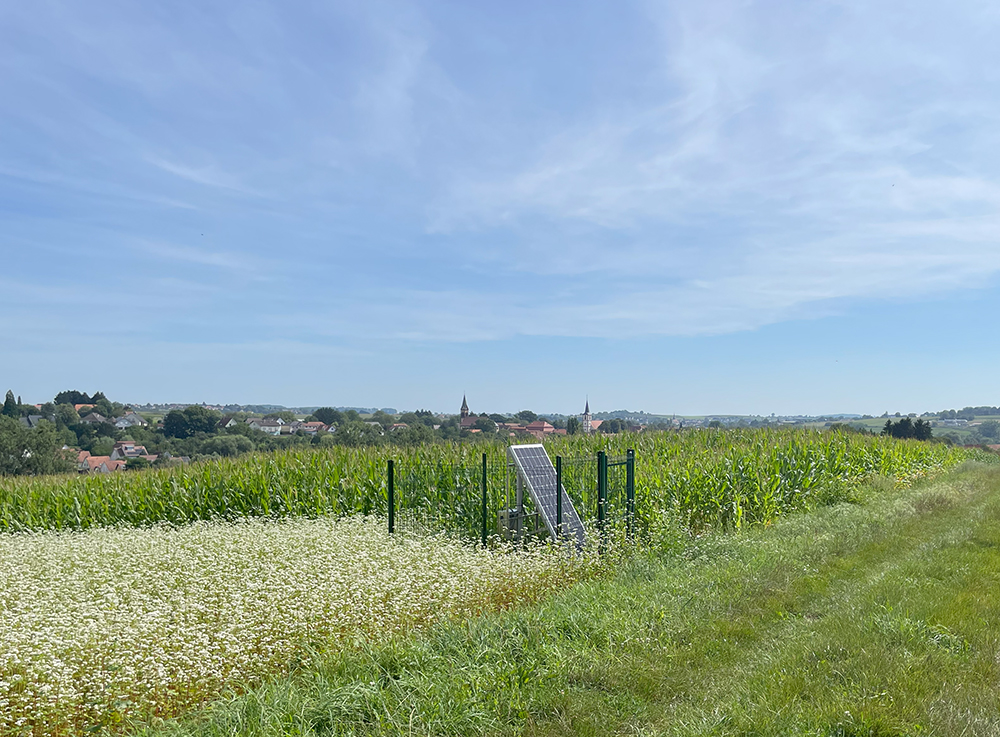
Before any operation begins, scientific studies are carried out to model the subsurface structures. Subsequently, and throughout the operations, subsurface movements are continuously monitored using sensors from Lithium de France’s monitoring stations.